


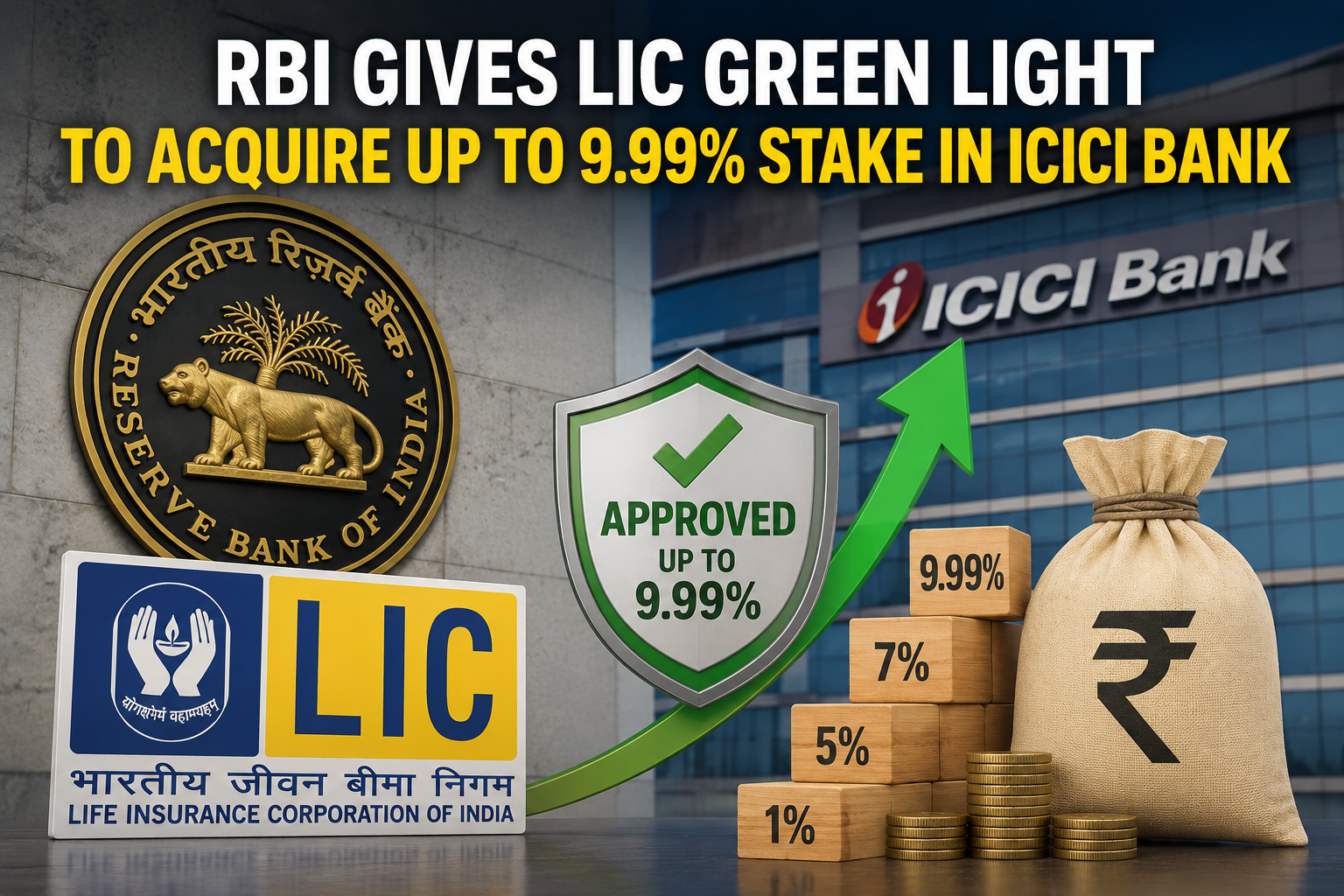
The Reserve Bank of India (RBI) has sanctioned Life Insurance Corporation of India (LIC) to purchase shares of HDFC Bank in such a way that the total holding in the bank does not exceed 9.99%, thus permitting the largest insurance company in India to substantially increase its share in one of India’s leading private sector banks.
As per the regulatory filing of HDFC Bank, the approval was made by RBI through a letter on August 19, after an application from LIC. This approval is for a shareholding in the bank up to 9.99% of the paid-up share capital or voting rights of the bank.
Currently, LIC owns 4.11% of the total share capital of HDFC Bank, which is as per the latest beneficial position available up till August 14, 2026. Therefore, the approval would allow LIC the opportunity to invest more in the bank.
It may be noted here that the approval of RBI does not necessarily imply that the insurance company would invest further in the bank. Further investment would be subject to the conditions laid down by the central bank.
The approval is subject to the provisions of the Banking Regulation Act, 1949, the RBI’s guidelines regarding acquisition and maintenance of shares or voting powers in commercial banks, the Foreign Exchange Management Act (FEMA), and SEBI rules.
This is a positive development for both the entities. For LIC, the increased possibility to hold shares will serve to enhance its presence in India’s banking and finance industry. For HDFC Bank, the approval can mean more institutional interest in its shares, though the real impact will be seen only if LIC decides to increase its shareholding.
HDFC Bank continues to be one of the largest private banks in India, while LIC is one of the largest institutional investors in India. With the new RBI approval, LIC gets more freedom to manage its shareholdings in HDFC Bank, while keeping the rise in shareholding in compliance with the regulatory requirements.
It is also worth pointing out that the involvement of institutional investors in India’s financial sector stays relevant in the age of tight regulatory control.